
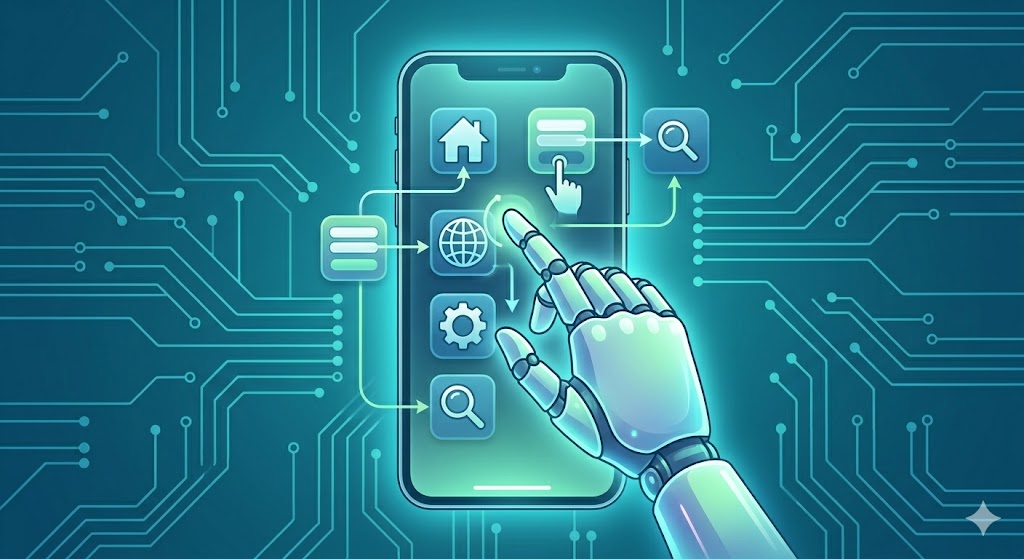
The mid-April to mid-May 2026 window has marked a profound shift in the AI landscape. We are officially moving past the “chatbot wrapper” era and entering the Agentic OS Era, where AI is being hardwired directly into operating systems to execute multi-step workflows autonomously.
At the same time, the ecosystem is experiencing severe growing pains: major infrastructure supply-chain hacks have put developers on high alert, and tech giants are facing friction regarding enterprise ROI and hardware optimization.
The Latest Hot Topic: The Shift to Autonomous OS Agents
The biggest discussion right now centers around Agentic AI—specifically, how AI is moving from a passive assistant that answers questions to an active agent that takes over the user interface to execute complex tasks on your behalf.
New Features & Capabilities
- Gemini Intelligence & Android 17: Unveiled recently, this turns the mobile OS into a proactive “intelligence system.” Features like Chrome’s “Auto Browse” allow the AI to actively scroll, tap, and complete forms to book parking, buy groceries, or handle online reservations without the user ever opening a separate app.
- The “Googlebook” Category: A new AI-first laptop lineup designed entirely around proactive assistance was teased. It features Magic Pointer—an AI-enhanced cursor that contextually predicts actions (like mapping out a design idea or drafting a calendar invite) based purely on screen context.
- OpenAI’s GPT-5.1 & Computer-Use API: OpenAI dropped a massive API wave, establishing GPT-5.1 as the flagship reasoning engine. Crucially, they introduced a “none-reasoning” toggle so developers only pay for deep thinking when a task scales in complexity. They also expanded access to their “computer use preview” mode, allowing models to directly navigate software UIs from raw instructions.
- The Evolution of “Vibe Coding”: With the introduction of platforms like Google Antigravity (an agent-first IDE), developer tactics are shifting. Teams are moving away from casually prompting code snippets to utilizing autonomous environments that handle heavy architecture planning, multi-file feature writing, and end-to-end browser testing natively.
Tactics, Issues, and Roadblocks Users Are Running Into
While the technical leaps are massive, practical deployment has hit a wall of security risks and hardware friction.
1. The AI Supply-Chain Security Crisis
The single biggest issue for developers right now is a highly coordinated cyberattack campaign by a threat actor known as TeamPCP.
- The Problem: Instead of targeting frontier AI models directly (which are heavily defended), attackers are executing supply-chain compromises on the orchestration layers, open-source wrapper libraries (such as LiteLLM and BerriAI), and major developer dependencies like the TanStack library.
- The Impact: These attacks have compromised code repositories and internal credentials for major players, including OpenAI and Mistral AI. Developers are running into malicious npm and PyPI packages that can exfiltrate credentials via prompt injection or rogue agent permissions.
2. Hardware Optimization & The “AI Fatigue” Backlash
On the consumer and enterprise side, users are pushing back against the heavy AI-on-everything mandate.
- NPU Battery Drain: Windows 11 users adopting the heavily marketed Neural Processing Unit (NPU) laptops have run into severe battery degradation and performance drops due to unoptimized background drivers running AI capabilities.
- The ROI Question: Recent tech sector data reveals an alarmingly low paid adoption rate (around 3.3%) for premium desktop AI copilots, contrasted against staggering quarterly infrastructure spending. Users are finding that basic tasks don’t justify premium subscription tiers, forcing providers to scale back deeply integrated features.
Relevant & Useful Insights
If you are managing platforms, developing tools, or trying to deploy AI workflows right now, here is the ground truth:
- Audit Your Orchestration Layer: If your tech stack relies on open-source AI wrappers, API connectors, or autonomous skills, audit them immediately. The current meta for malicious actors is exploiting the “connectors” rather than the LLMs. Ensure automated code behavior scanning is active.
- Design for “Granular Permission”: As UI-operating agents hit production, the primary user fear is unauthorized actions (e.g., an agent making an unapproved purchase or data transfer). If you are building agentic workflows, build in explicit “human-in-the-loop” checkpoints for high-stakes actions.
- Optimize for Compute Efficiency: Follow the pattern set by the latest architectures. Don’t waste budget on heavy reasoning models for basic data classification, routing, or validation. Use smaller, specialized models (like the new nano/mini tiers) and escalate to deep reasoning engines only when multi-step logic is explicitly required.