
Let’s get one thing out of the way. If “brand storytelling” makes you think of a founder’s 14-line post about a hard Tuesday, I get why you roll your eyes. That stuff gives the whole idea a bad name. It’s also not what I’m talking about.
The lead-gen trap
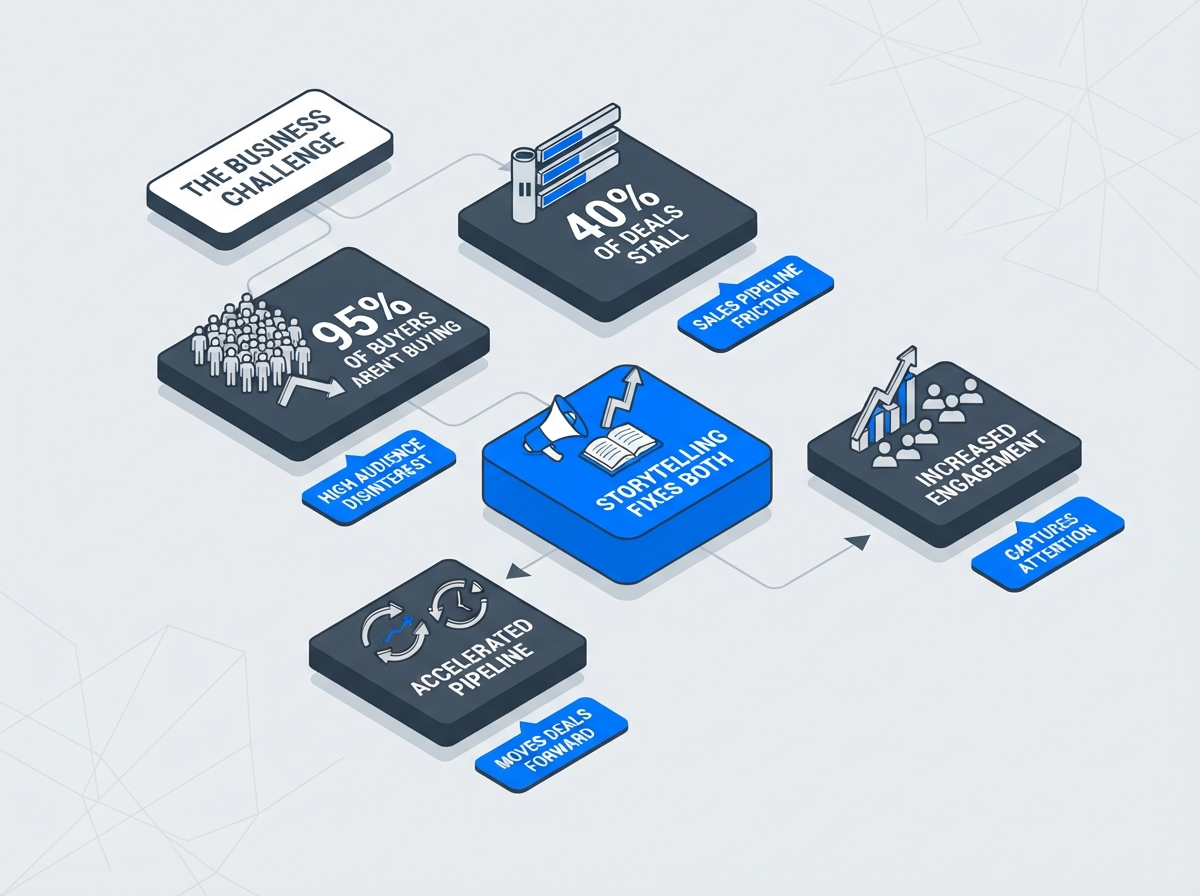
Here’s the number that should bug you. Up to 95% of your buyers are out-of-market at any given time. So when your whole program is feature-led demand gen, you’re talking to the 5% who happen to be shopping right now. Everyone else scrolls past.
You can optimize that 5% forever. Tighter targeting, sharper offers, better landing pages. You’ll still hit a ceiling, because you’ve run out of people who are ready to listen.
What mental availability actually buys you
The other 95% aren’t ignoring you. They’re just not buying yet. When they are, they build a shortlist from the brands they already remember. That’s what a narrative does. It plants a clear idea of who you are and what problem you own, so you’re on the list on day one. You don’t have to outbid everyone for attention once the buyer is already in-market.
95% of your buyers are out-of-market
Most B2B marketers leave this lever untouched. Emotion, humor, and storytelling are badly underused in B2B, even though they’re the same creative tools tied to outsized long-term brand equity and commercial results. So the gap is open, and most of your competitors are ignoring it.
The deal that dies in a meeting you’re not in
Say you win the champion. The demo went great, the feature sheet checked every box, and your contact is excited. Then the deal stalls anyway. More than 40% of B2B deals stall because the buying group isn’t aligned internally. Your champion understands the product. But procurement, security, and the CFO are “hidden buyers” who never sat in your demo. Those people don’t care about your feature list. They want to know whether this is a safe, defensible bet.
They want to know whether this is a safe, defensible bet
Strong brand narratives and thought leadership are among the main things that de-risk the purchase for those non-technical buyers. A clear story gives your champion something to carry into a room you’ll never see. It answers “why this, why now, why them” in language a CFO can repeat. A spec sheet can’t do that.
The full-funnel effect
This is where your revenue-minded colleagues should lean in. Buyers who’ve already seen a company’s brand-building marketing are 19% more likely to accept a connection request from its sales reps, and 15% more likely to accept an InMail. Think about what that means for your SDRs. Same reps, same messages, same quota. But the people they reach out to already know who you are, so more of them say yes.
The logic is plain. When more outreach turns into conversations without extra spend, your cost of getting a conversation drops. Run that math against your own numbers. That’s pipeline acceleration, and it starts well before anyone issues an RFP.
How to run it on LinkedIn
Skip the sentiment. Build the story like you’d build a business case, in three beats:
- Problem premise. Name the problem your buyers live with, in their words, not yours.
- Market shift. Explain what changed that makes the old approach stop working.
- Quantified transformation. Show what the world looks like after, with real numbers from your own customers.
Then run it in two places at once. Your executives’ personal profiles carry the voice and the point of view. Your paid company channels carry the reach and repetition. Same story in both, so a buyer who sees it twice doesn’t think they’re seeing two different companies.
The pitch to your CFO
When someone in finance calls storytelling a nice-to-have, don’t argue about creativity. Argue about risk.
95% of your market isn’t buying today, and 40% of the deals you do get can stall in rooms you can’t enter. A story is how you cover both gaps. It keeps you remembered while buyers aren’t looking, and it gives your champions something to sell internally once they are.
That’s not fluff. That’s how you fix both.